Sylvester Manor’s outdoor sculpture exhibition, [R]evolution, has received a $20,000 grant from Discover Long Island, an award recognizing the exhibition’s role in drawing visitors to Long Island through arts and cultural tourism.
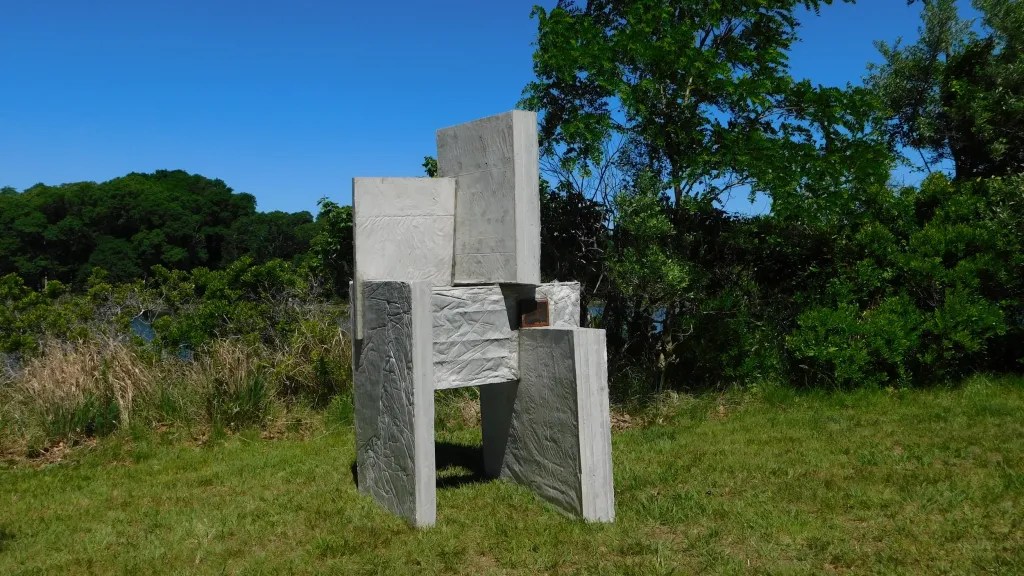
The exhibition, curated by Shelter Island resident and longtime art curator Tom Cugliani, features the work of 19 artists with ties to the East End whose sculptures and site-specific installations are displayed throughout the historic 236-acre grounds of Sylvester Manor. The exhibition opened June 13 and continues through Oct. 4. Admission is free.
Discover Long Island President and CEO Sharon Wyman said the grant represents “a strong investment in Long Island’s cultural tourism economy” and reflects the exhibition’s commitment to preserving and enhancing the region’s historic, artistic and cultural assets.
This year’s exhibition commemorates the nation’s 250th anniversary by exploring the twin ideas of revolution and evolution. Drawing inspiration from Thomas Paine’s Common Sense and Charles Darwin’s On the Origin of Species, the works examine how societies, landscapes and ecosystems are transformed over time through political, cultural and natural change.


(Courtesy photos)
The sculptures are woven into the Manor’s woodlands, formal gardens and open fields, encouraging visitors to discover the artwork while exploring one of Shelter Island’s most historically significant properties. Several pieces were created specifically for the site, with artists incorporating natural materials harvested from the grounds or responding directly to the Manor’s centuries of layered history.
Among the featured installations are Maren Hassinger’s sweeping Monument (Sylvester Manor), created with students from the Shelter Island Union Free School District and local volunteers; J. Oscar Molina’s monumental Children of the World sculpture addressing migration and displacement; Karine Laval’s colorful hammock installation, and Gioia Kuss’ towering woven grapevine heart suspended between two mature beech trees.
Other works explore themes ranging from environmental stewardship and Indigenous history to climate change, media, community and democracy. Collectively, the exhibition reflects Sylvester Manor’s mission of using art to engage visitors with the property’s unique history, from its Indigenous Manhansett heritage and colonial plantation past to its ongoing role as a center for education, preservation and cultural programming.