
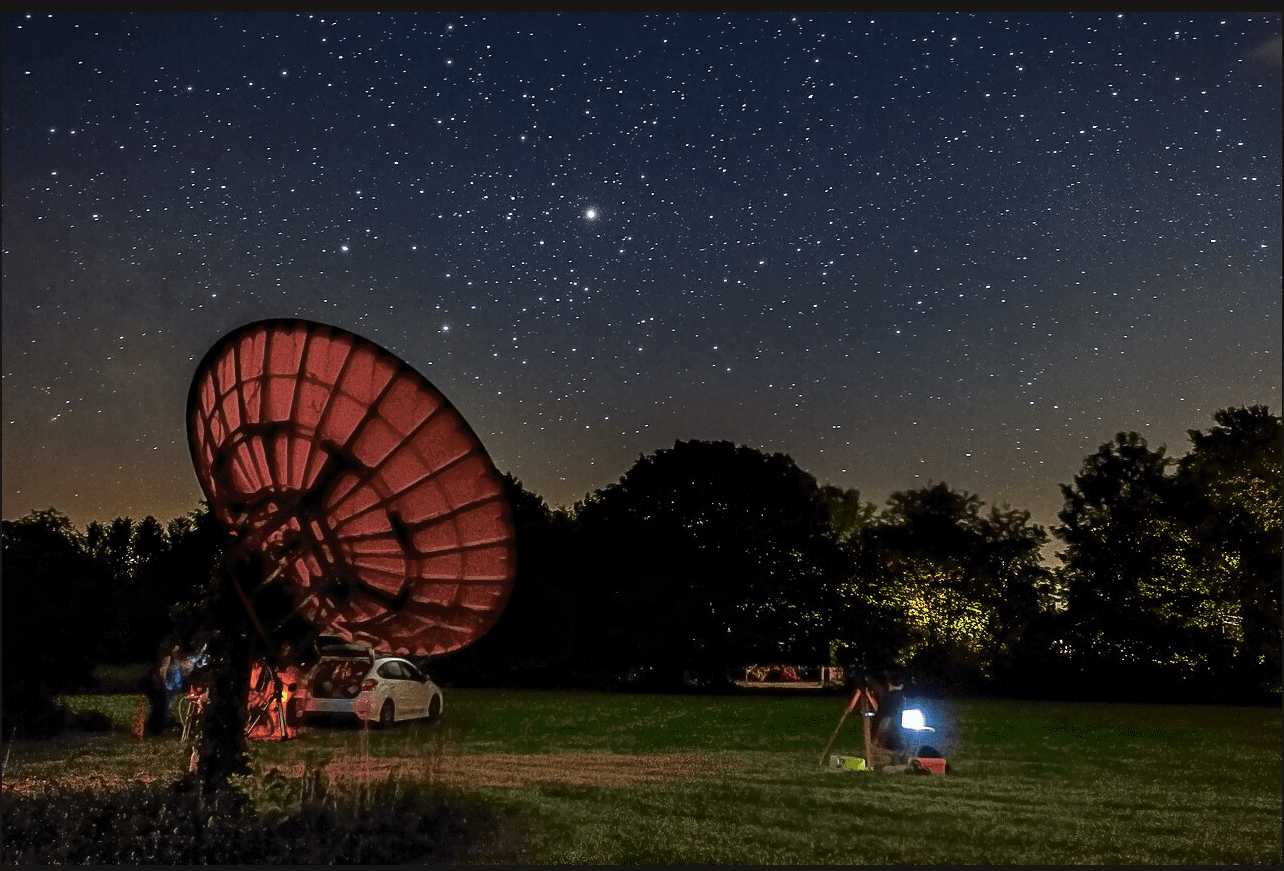

On a clear March night, the sky above the North Fork can feel almost impossibly deep.
The farms and open water surrounding Southold absorb much of the light that washes out the heavens elsewhere on Long Island, revealing a darker canvas where galaxies, nebulae and ancient star clusters slowly emerge.
On Saturday, March 21, for the first time, the Custer Institute & Observatory will attempt a Messier Marathon — inviting local stargazers to spend an entire night hunting down some of the most famous celestial objects visible from Earth.
Farhan Ali, Custer’s outreach director and a member of the board who organized the event, said the inspiration was simple.
“Messier Marathon is an experience that every amateur astronomer should experience at least once in their lifetime,” Ali said. Completing the full marathon, he said, is widely considered a milestone — “an unforgettable challenge that … observers talk about for years.”
The idea had also been lingering for another reason. Despite its long history as one of Long Island’s best-known observatories, Custer had never hosted an all-night Messier Marathon.
“It felt like the perfect moment to change that,” Ali said. “Dedicating an entire night to chasing every one of these iconic objects not only honors the long history of observational astronomy but also brings our community together under a shared sky.
“In many ways, this event is our way of saying: Let’s celebrate the night, the stars, and the legacy of exploration — together, from dusk till dawn.”
A demanding challenge for skywatchers
The Messier Marathon centers on the catalog of 110 deep-sky objects, compiled in the 18th century by French astronomer Charles Messier and his collaborator Pierre Méchain.
Finding them all in a single night, however, is far from easy.
“An all-night observing marathon is no small undertaking — it’s one of the most demanding challenges in amateur astronomy,” Ali said.
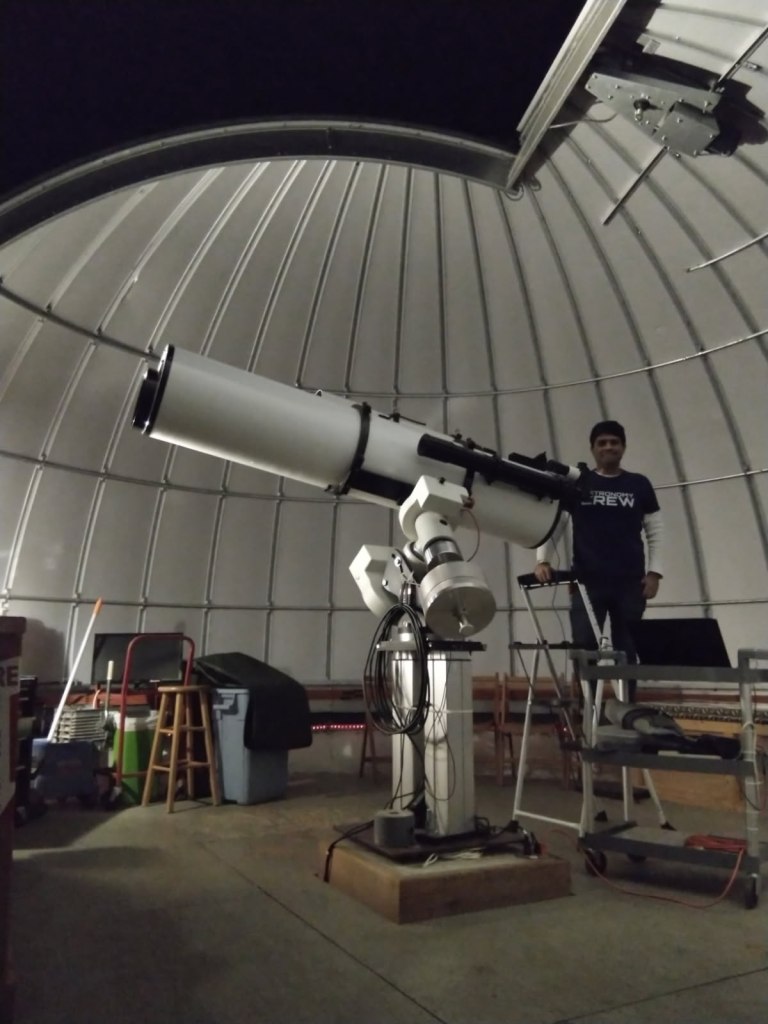
Participants must bring their own telescopes, many of them large, delicate and custom-built, Ali said — and assemble them on site before sunset. Each instrument must be carefully aligned and calibrated before the first observing window begins.
“Every telescope is different, requiring its own setup time and technical know-how.”
Traditionally, many astronomers attempt Messier Marathons alone.
“There’s a certain solitude to navigating the night sky hour by hour — working quietly, setting your own pace and chasing celestial targets without interruption,” Ali said.
Turning that solitary experience into a public event “requires extraordinary coordination between staff and guests — aligning logistics, timing, space and expectations so that everyone has the best possible chance to meet their individual observing goals,” he said.
‘Navigating’ the night sky
For newcomers, the marathon represents something profound, Ali said.
“What makes the Messier Marathon such a milestone for someone new to astronomy is the moment you realize you’re no longer just looking at the night sky — you’re actively navigating it.”
Participants must use star charts or astronomy apps to guide telescopes toward faint objects scattered across the sky. The process requires patience, skill and persistence.
“Telescopes are, quite literally, time machines,” Ali said. “Every faint galaxy and glowing nebula you observe — its light has traveled across space for millions of years to reach your eye.”
As observers guide their telescopes from one target to the next, they are effectively moving backward through cosmic history.
“That sense of connection to the universe, achieved in a single night of discovery and determination, is what makes [this] an experience that lasts a lifetime,” he said.

Racing the clock
Even under ideal conditions, completing the entire list of 110 objects in one night is extremely difficult from Long Island.
“Shortly after sunset, several objects are already setting close to the Sun,” Ali said. Observers must locate them quickly before they slip below the horizon.
A similar race occurs before sunrise, when there is only a narrow window to observe objects near the rising Sun.
“Successfully completing all 110 objects demands careful planning, precise timing and fast transitions between targets,” Ali said.
Some objects are particularly elusive. Among the most difficult are the faint Triangulum Galaxy (M33), the dim satellite galaxy M110 near Andromeda, and M74, sometimes nicknamed the “Phantom Galaxy” because it can vanish under anything less than pristine skies.

‘Out of this world’
One advantage for observers at Custer is the North Fork itself.
“The North Fork — especially areas like Southold — offers some of the darkest skies on Long Island for deep-sky observing,” Ali said. “Compared to the heavily light-polluted western and central parts of Long Island, the North Fork stands out as a rare and valuable refuge for astronomers seeking clearer, deeper views of the cosmos.”
He said Custer’s staff and volunteer docents will also be on hand throughout the night to help guide participants and explain the celestial objects they encounter.
For many participants, the moment they locate a distant galaxy or nebula for the first time can be unforgettable, Ali said.
“The feeling is truly out of this world — an unforgettable sense of awe that stays with them for a lifetime.”
He believes the experience reconnects people with something “ancient.”
“For most of human history, our ancestors lived intimately connected to the night sky,” he said. “Navigation, and survival, was guided by the heavens.”
Modern cities have dimmed that relationship beneath artificial light. But on a clear night on the North Fork, the stars still have the power to inspire.
“When participants locate a distant object for themselves,” Ali said, “they’re reclaiming something ancient — the same sense of wonder our ancestors felt beneath a star-filled sky.”